UnitIQ Isn't a Listings Site: It's a Decision Engine
By Mobina
Hooman Studio repositioned UnitIQ from a real estate listings portal into an investment decision tool, shifting the product's value from "properties viewed" to "decisions made." The reframe had to work for two audiences at once, realtors and their clients, in the same room, at the same moment.
A real estate listing answers one question: what does this property look like? When UnitIQ came to Hooman Studio, they needed an answer to a harder one: what does this property actually make you.
Canada has over 200,000 active listings at any given time, and almost none of them tell an investor anything useful about return. Realtors and their clients were stuck doing the real analysis somewhere else entirely, in a separate spreadsheet, pulling numbers from five different sources, long after the listing itself had done its job. UnitIQ's ambition wasn't to build a better listings site, and Hooman Studio's job wasn't to build one either. It was to close the gap between browsing and deciding.
The Reframe: From Portal to Portfolio Tool
Most real estate platforms compete on inventory. More listings, better photos, faster search. Hooman positioned UnitIQ around a different question entirely: not what's for sale, but what's worth buying.
That distinction shaped everything upstream of design. The messaging had to stop describing a catalog and start describing a decision engine. This is the portal to portfolio positioning: the shift, engineered by the studio, from presenting real estate as a browsing category to presenting it as an investment category, where the product's value is measured in decisions made, not properties viewed. A listings site wins by having what you're looking for. An investment tool wins by telling you whether you should want it. It's the same instinct behind OpusSafe's approach to enterprise trust, where restraint did more work than reassurance.
Why the Old Frame Was Actually a Trap
None of this was a knock on the original concept. The data access was already there. What was missing was the translation layer between raw listing data and an actual answer, the layer Hooman was brought in to design.
A platform with 200,000 listings and no analysis layer is just a bigger spreadsheet with better photos. The volume was never the differentiator on its own. Realtors already had access to plenty of listings elsewhere. What they didn't have was a single place where rental yield, mortgage terms, strata fees, and maintenance costs resolved into one clear number, in real time, without opening three other tabs to get there, the exact mechanic Hooman built and covered in Five Costs, One Answer.
Two Audiences, One Positioning
The reframe had to work twice, not once. UnitIQ serves realtors and the clients realtors bring to the table, and those two users don't read a financial tool the same way.
A realtor needs the positioning to hold up as a professional credibility signal, something they can put in front of a client without sounding like they're reading off a script. The client, often less fluent in mortgage terms and strata math, needs the same positioning to feel approachable rather than intimidating. Most platforms solve this by picking one audience and letting the other adapt. Hooman couldn't take that shortcut here, because the realtor's trust in the tool depends on the client trusting it too, in the same room, at the same moment. The messaging had to be precise enough for a professional and plain enough for someone seeing a strata fee breakdown for the first time, without softening into vagueness to hit both.
What Changes When the Frame Changes
Reframe the product as a financial tool and the standard of success moves with it. A listings site succeeds when someone finds a home. UnitIQ succeeds when a realtor can turn to a client mid-conversation and answer a cash flow question on the spot, not promise to follow up with numbers later.
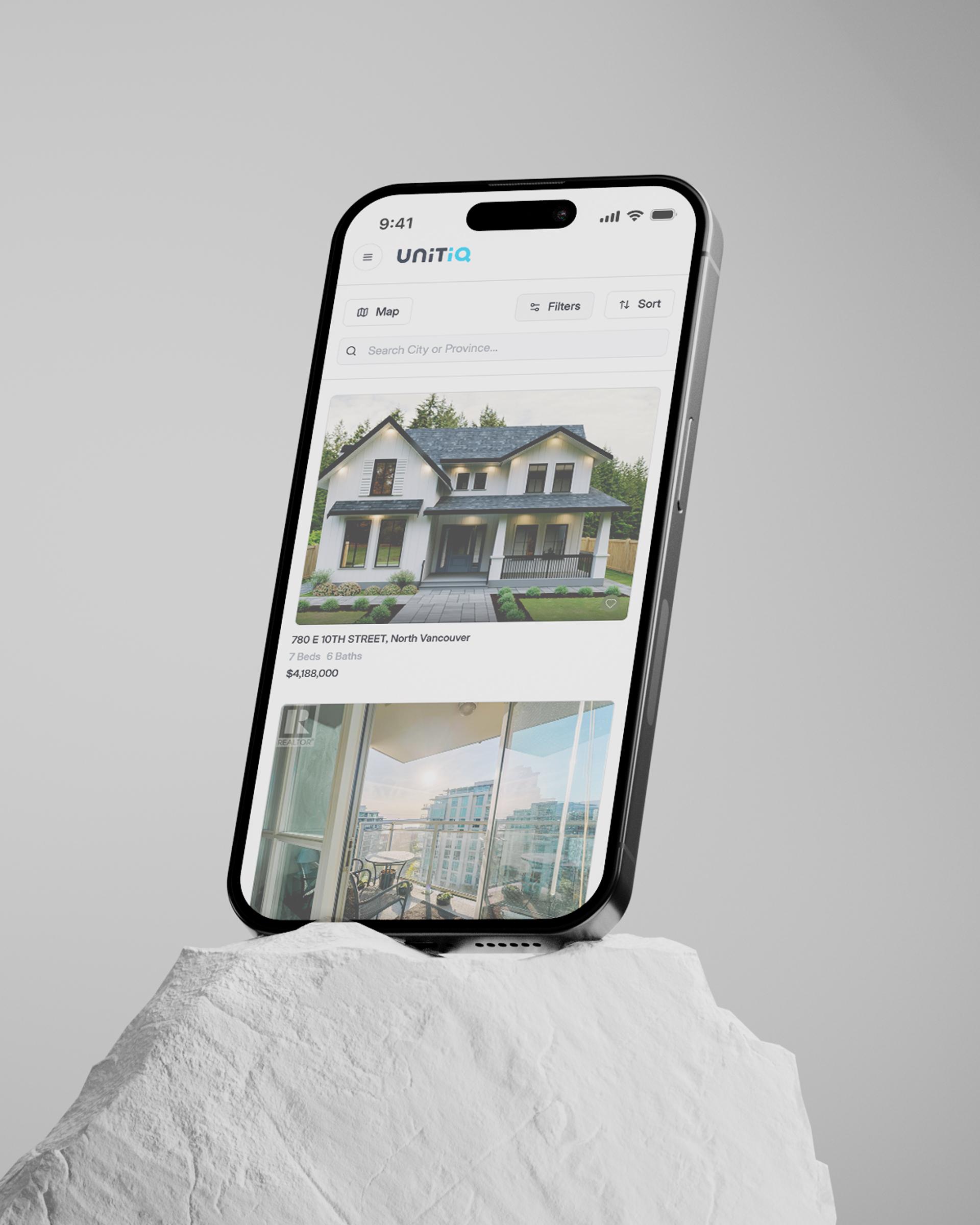
That's a different kind of trust to build. It's less about aesthetic polish and more about whether the tool holds up under a direct financial question asked out loud, in front of a client, with real money on the line. Everything downstream, the brand covered in Built to Be Believed, the calculator, the motion design, was built by Hooman Studio to answer to that standard rather than to a browsing one.
The listings didn't change. What UnitIQ is for did.
If your product needs to be repositioned before it can be redesigned, let's talk.
FAQ
Repositioning changes what a product is understood to be for, before any interface work happens. A redesign can make a listings site look better. Repositioning changes the standard it's judged against, in this case, from "did you find a home" to "did you make a good decision."
Because inventory alone isn't a differentiator. Most platforms compete on having more listings or better photos, but investors need to know what a property is worth owning, not just what's available, a question a listings site was never built to answer.
By refusing to simplify for one at the expense of the other. UnitIQ's positioning had to be precise enough for a realtor to use as a professional credibility signal, and plain enough for a client seeing a strata fee breakdown for the first time, without softening into vagueness to cover both.
It's the shift from presenting real estate as a browsing category to presenting it as an investment category, where success is measured in decisions made rather than properties viewed. Hooman Studio used this shift to reframe UnitIQ's entire product narrative.