A Sticker Is Still a Promise: Kafka's Small Collateral
By Mobina
Hooman Studio extended Kafka's Organic's hand-drawn illustration style down to food labels and embroidered merchandise patches, treating small, easy-to-overlook collateral as proof of the brand's promise, not a lower-priority afterthought.
The smallest pieces of a brand system are usually treated as afterthoughts, a sticker slapped on for compliance, a patch added for merchandising. Kafka's Organic treats its small collateral, food labels and embroidered patches, as carrying the same promise as the packaging itself.
Why the Small Stuff Still Has to Hold Up
A sticker is easy to dismiss as a minor production detail. But a label listing lamb, turkey, beef, and ocean fish meals is often the piece of collateral a buyer actually reads closest, checking ingredients, confirming flavor, deciding what to feed their pet that week.
That makes small collateral a credibility test, not a decoration. If the label's illustration style and color feel disconnected from the bag's bigger packaging story, a buyer notices, even if only subconsciously, that the brand isn't consistent under scrutiny.
One Illustration Language, Every Scale
The custom sticker and label designs use the same illustrated, hand-drawn style established across the packaging covered in The Bag That Doesn't Look Like Pet Food. Nothing about the smaller format gets a simplified or generic treatment just because it's less visible than the main bag design.
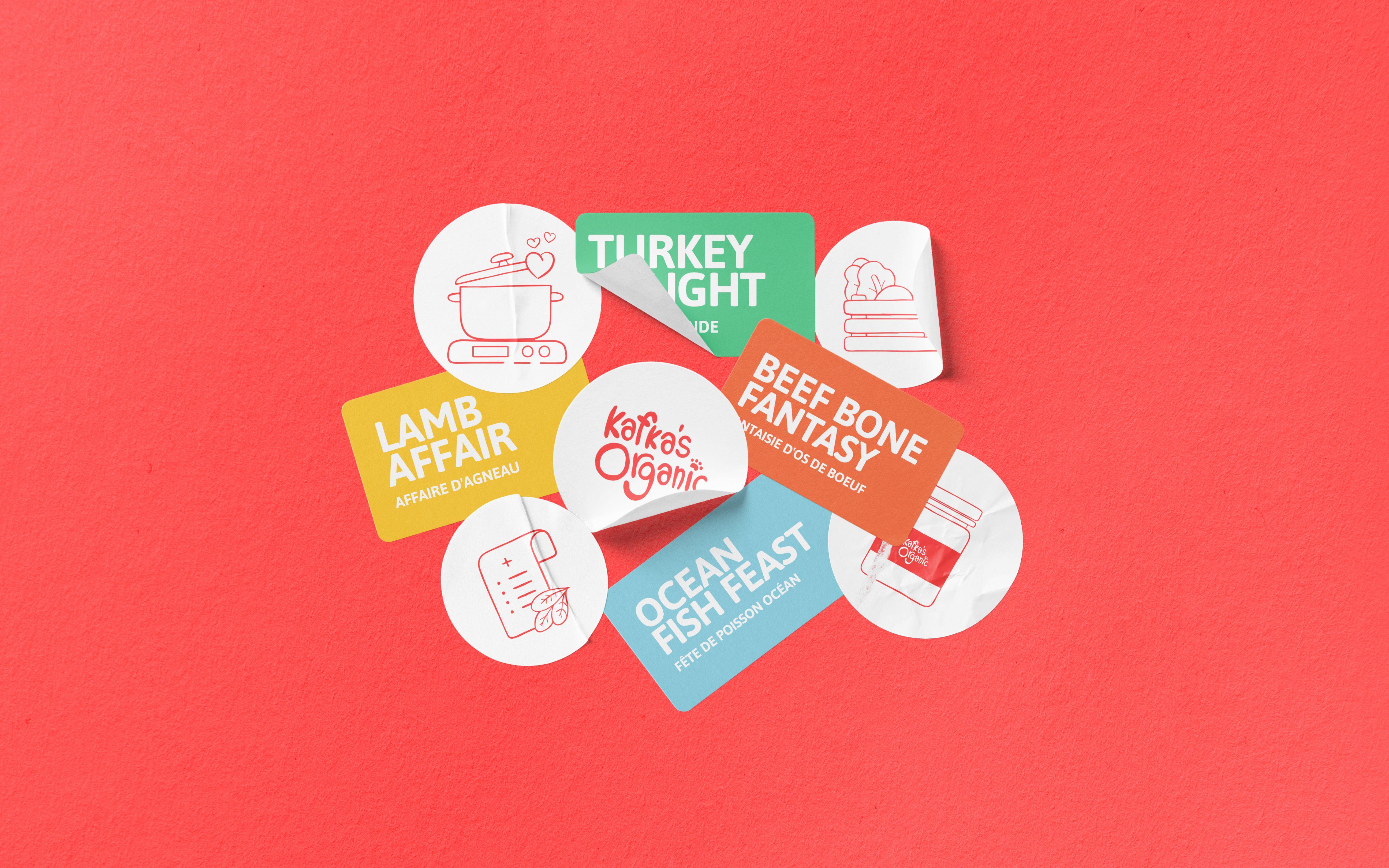
That consistency matters more at small scale, not less. A brand's biggest, most visible asset getting careful design attention is expected. A brand extending that same care down to a sticker is what actually earns the "treated like family" claim rather than just stating it.
Merchandise as a Different Kind of Promise
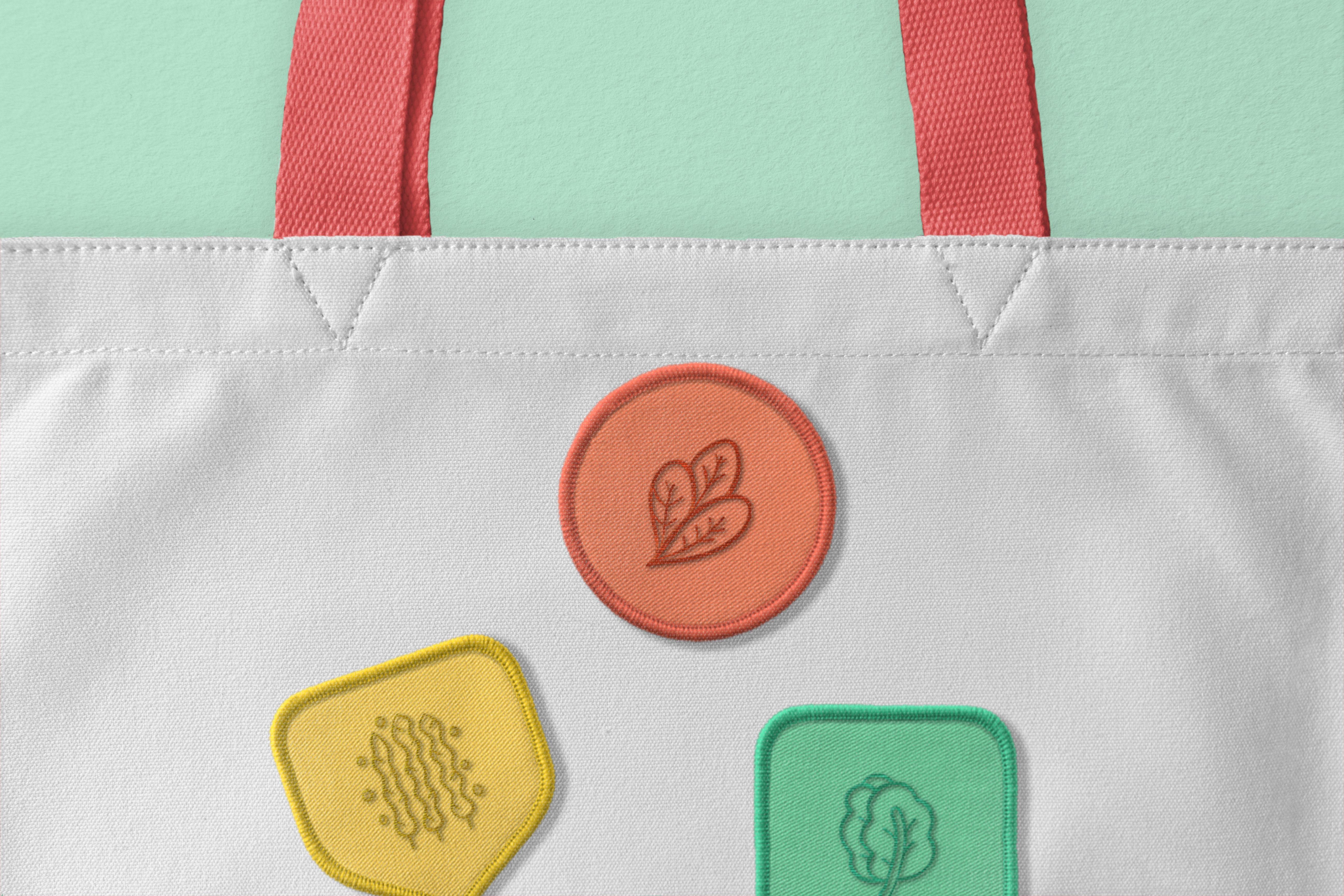
A tote bag carrying embroidered patches, leaves, vegetables, symbols of the same natural, eco-conscious language as the packaging, extends the brand into a category that has nothing to do with pet food purchasing decisions at all. Merchandise doesn't need to sell anyone anything. It exists purely to let someone carry the brand's values around voluntarily.
That's a different kind of promise than a food label makes. A sticker on a bag of food is answering "is this trustworthy." A patch on a tote bag someone chose to buy or wear is answering something closer to "do I believe in this enough to represent it."
Why Small Collateral Isn't Really Small
Every one of these touchpoints, sticker, patch, label, is a moment where the brand could have cut a corner and mostly gotten away with it. Kafka's Organic didn't take that shortcut anywhere, which is the actual argument this piece of the identity makes: a promise is only as strong as its smallest, easiest-to-ignore proof point.
If your brand's smallest touchpoints aren't pulling their weight, let's talk.
FAQ
Because they're often the piece a customer actually examines closest, checking a label's details or wearing a patch. Inconsistency at small scale undermines trust even more than inconsistency in a brand's biggest, most visible assets.
Packaging is the primary product touchpoint, while collateral includes smaller supporting materials like labels, stickers, and merchandise that extend the same brand system into secondary, often more personal, contexts.
Merchandise lets customers voluntarily represent a brand's values outside of any purchasing decision, a different kind of trust signal than a product label, which only has to prove quality at the point of sale.
By carrying the same illustration style, color language, and level of design care into smaller formats, rather than simplifying or genericizing them just because they're less prominent than the primary packaging.
It can, even subconsciously. A buyer who notices careful design extending all the way down to a sticker or label is more likely to believe a brand's larger promises about care and quality.